A quantum system made of many parts is, in general, hopeless to solve. What saves us is that the questions worth asking usually have universal answers: they depend on symmetry, dimensionality and conservation laws, and not on the microscopic details. Finding those answers — and the minimal models in which they can be derived exactly — is what most of my work is about.
Many-body quantum chaos
Random matrix theory describes the spectra of chaotic quantum systems remarkably well — but it says nothing about space. In extended systems, chaos has to spread, and the spectral form factor picks up a whole structure of timescales before random-matrix behaviour sets in.
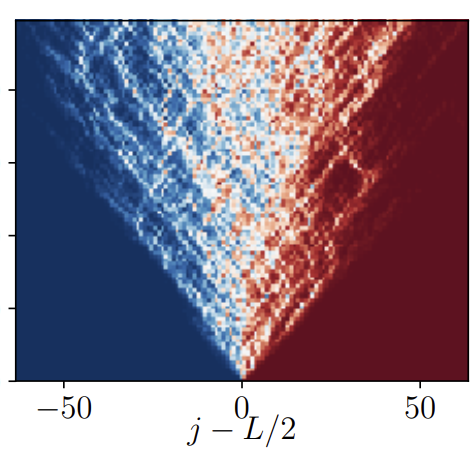
With Amos Chan and John Chalker we introduced a minimal model of random unitary circuits in which this crossover can be computed exactly, and later showed how space-time translational invariance, conserved charges and the Ginibre ensemble each leave their own signature. The same machinery describes the projected ensemble and deep thermalization: the statistics of the state left behind when part of a chaotic system is measured.
Monitored dynamics and measurement-induced transitions
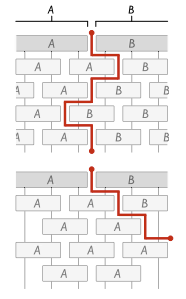
Watching a quantum system changes it. When unitary dynamics that generates entanglement competes with measurements that destroy it, the result is a genuine phase transition in the structure of the trajectory ensemble — visible in entanglement, and in how long it takes the observer to learn the state (purification).
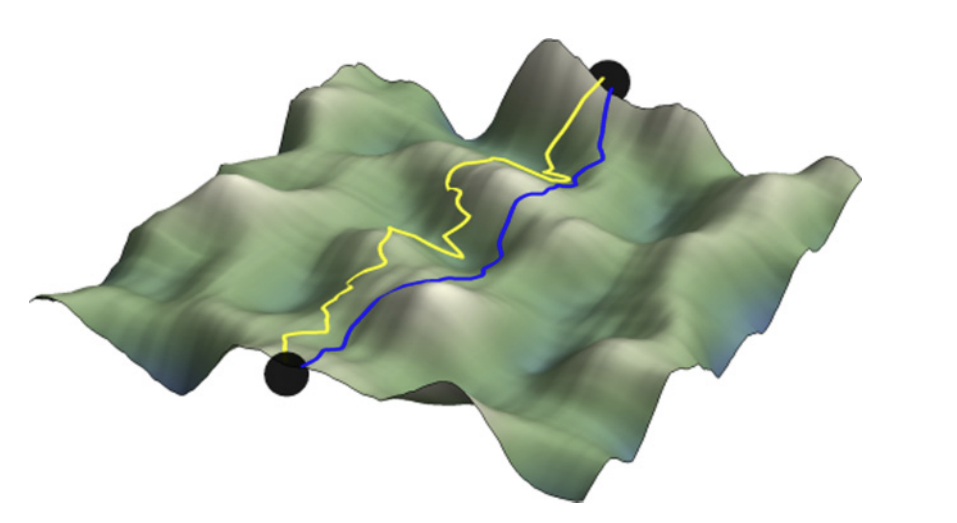
Because the observable quantities are non-linear in the state, this physics is hard to reach: it requires a replica limit and a careful analytic continuation. Part of my work has been to find settings where that limit can be controlled — free fermions, Brownian SYK clusters, Clifford circuits, and a mapping onto the directed polymer on a tree, where the transition in an observer’s ability to track a chaotic system sits exactly at the freezing point of the polymer.
Randomness as a quantum resource
How random is the state produced by a quantum circuit, and how quickly does it become so? Quantum state designs, anticoncentration of the output distribution, and nonstabilizerness (magic) are three complementary ways of asking that question — and they are exactly the quantities that decide whether a circuit is classically simulable.
Recent work with the group covers anticoncentration in noisy circuits at finite depth, where a universal form appears well before the Haar limit; anticoncentration in Clifford circuits and random tensor networks, where pseudo-magic states show up; and state designs in measured tensor network states, where an emergent confinement mechanism controls the approach to randomness.
Noise, dissipation and transport
Integrable systems transport ballistically, and generalized hydrodynamics describes them with remarkable accuracy. Real systems are neither perfectly integrable nor perfectly isolated: weak integrability breaking, dephasing noise and dissipation turn ballistic transport into diffusion, and the crossover itself has universal features.
This line runs from generalized hydrodynamics with dephasing noise and the thermalization of trapped 1D Bose gases, through boundary resistances in inhomogeneous spin chains, to the spectral and steady-state properties of random quadratic Liouvillians and the universality that emerges in the transport of noisy free fermions.
Disorder, localization and classical statistical physics
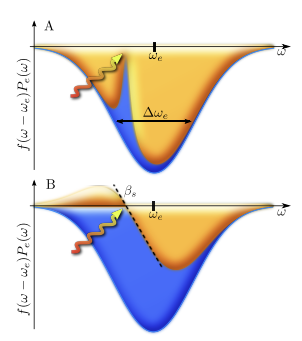
My earlier work concerned ergodicity breaking: many-body localization, and Anderson localization on the Bethe lattice, where extended states can still be non-ergodic. A concrete experimental face of this is dynamic nuclear polarization, where the competition between disorder and interaction in a driven electron-spin system decides the shape of the measured EPR spectrum.
Some of the same tools — directed polymers, tree-like networks, rare-event statistics — apply far from quantum mechanics. With Alberto Rosso and Laurent Talon we used them to derive Darcy’s law for yield stress fluids, where the flow through a porous medium starts through a single channel and the effective law is non-linear.
The work described here was supported in part by the ANR JCJC grant TamEnt (2021–2025). See the publications for the papers behind each of these paragraphs.